An autumn love affair with llamas, slow living and the restorative landscapes of Ticino in Switzerland
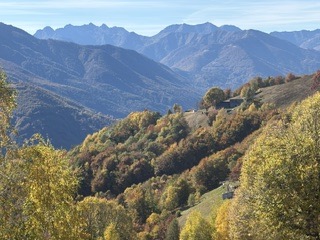
The setting was still, tranquil and impossibly beautiful. A canvas of vivid autumn colours, fresh mountain air and golden sunlight. Time seemed to stand still. It was one of those moments you instinctively want to savour, when the outside world fades away and you become completely absorbed in your surroundings. A memory captured, treasured and permanently etched in my mind. The perfect place for an autumn love affair with Switzerland
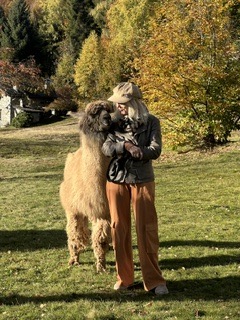
He was poised and attentive, blond with soft, curly hair, the sort you instinctively want to stroke. His big, dark eyes watched me without blinking, occasionally distracted by the breath-taking views that had drawn us together. Polite and courteous, he allowed me to walk ahead as we squeezed between leafy canopies before joining me at my side as the pathway opened onto a spectacular vista.
I had, quite unexpectedly, fallen in love. Not with a man, but with a caramel-coloured llama called Vanir.
Llama Trekking: A Different Kind of Wellness Walk
Our encounter took place along the mushroom trail on Mount Comino in the Centovalli, where Vanir became my rather charming escort. Surrounded by the rich autumn palette of the landscape, our silhouettes blended into the scenery as we wandered through the southern canton of Ticino.
There is something wonderfully restorative about walking in nature, particularly when the pace is dictated by a four-legged companion rather than a schedule. The fresh alpine air, the gentle rhythm of the walk and the ever-changing mountain views offered a welcome opportunity to disconnect from everyday distractions and reconnect with the natural world. It was mindful travel at its most delightful, with a little llama companionship thrown in.
Our rural adventure continued with a memorable farm-to-table lunch. Homemade pumpkin soup, crusty bread, local cheeses and cured hams were followed by mushroom risotto, each dish delicately finished with edible flowers. Simple, seasonal ingredients, sourced close to where we were sitting, made for a delicious introduction to the region’s agricultural traditions. This was agritourism at its best: authentic, sustainable and deeply connected to place.
Getting there was an adventure in itself. We stepped aboard the scenic Centovalli railway in Locarno, enjoying a leisurely journey through the alpine landscape, passing traditional villages and homes perched precariously on mountain ledges. Winding roads disappeared into the hills as we travelled upwards towards Verdasio, where a cable car carried us further into the mountains. The journey was as much a part of the experience as the destination.
Ascona: Lakeside Living and Slow Travel
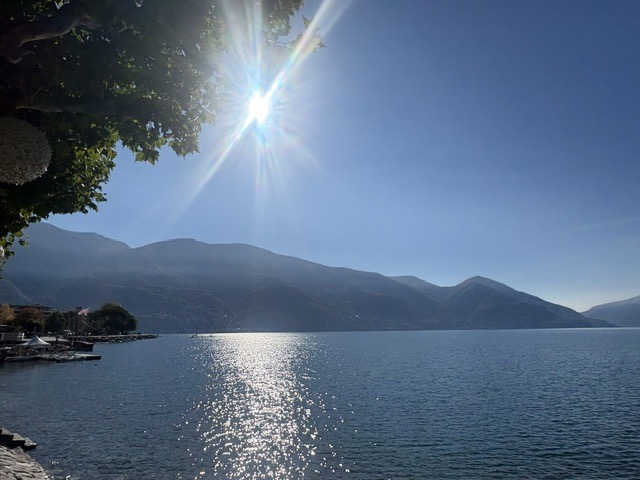
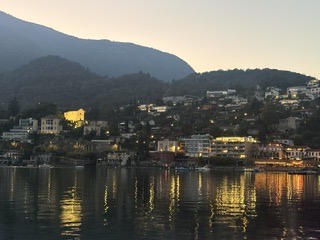
Our base was the delightful lakeside town of Ascona, best explored on foot. Its promenade, lined with pastel-coloured buildings, palm trees, sculptures and cafés spilling towards the shimmering glacial waters of Lake Maggiore, invites you to slow down and enjoy the moment.
Once a fishing town, Ascona sits on the northern shore of the lake, with enviable views across the water towards the surrounding mountains. Small boats gently lace the shoreline, while the Mediterranean feel of the town creates an intriguing contrast with its distinctly Swiss character.
Behind the waterfront, a labyrinth of medieval-style alleyways reveals antique galleries, artist studios, independent boutiques and beautifully preserved historic architecture. It is a place to wander without an agenda, discovering little corners of the town along the way.
Worth a visit is the Church of Santi Pietro e Paolo, parts of which date back to the thirteenth century. Adorned with ceiling frescoes above the altar and featuring an impressive bell tower, it remains one of Ascona’s most recognisable landmarks. The spacious lakeside setting also hosts a variety of festivals, including the annual JazzAscona, bringing music and a lively atmosphere to the waterfront.
There is no shortage of accommodation, but it is hard to miss the Romantik Hotel Castello Seeschloss with its impressive tower. Originally a medieval castle dating back to the thirteenth century, it is now a four-star hotel with classic décor, an outdoor swimming pool and the Ristorante Al Lago. The restaurant offers excellent service overlooking gardens, sculptures and the lake – a lovely setting in which to linger over a leisurely meal.
Just fifteen minutes by boat from Ascona lie the Brissago Islands, often described as a floating garden. A visit here offers a wonderful change of pace, particularly for anyone drawn to botanical gardens, nature and the restorative qualities of green spaces.
The Brissago Islands: A Botanical Escape
Although the smaller island is closed to visitors to protect its rare native plants, the larger island is home to Switzerland’s only botanical park. More than 2,000 plant species from subtropical climates around the world flourish here, benefiting from the shelter of the surrounding mountain chains and the lake’s unusually mild climate.
The garden was created between 1885 and 1928 by Russian baroness Antoinette Saint-Léger. Many of the plants she introduced can still be admired today, including a cinnamon tree originating from the Himalayas.
With around 300 species of bamboo, walking through the dense bamboo groves is an experience in itself. Neat pathways wind past pink pepper, strawberry guava and aromatic plants, creating a peaceful sanctuary that feels far removed from the mainland.
The paths eventually lead to Villa Emden, where silk wallpaper and elaborate flooring provide an elegant backdrop for an alfresco lunch. It is an invitation to pause, absorb the surroundings and enjoy the simple pleasure of dining outdoors.
For me, this is one of the great pleasures of wellness travel: finding places where nature, history and beautiful surroundings combine to encourage us to slow down, breathe deeply and appreciate where we are.
Beyond Ascona: Rural Traditions and the Art of Slow Food
Day excursions from Ascona reveal another side of Ticino. Scenic drives wind around hairpin bends through the alpine landscape, opening up views of dramatic gorges, traditional villages and unspoilt countryside. Ponte Brolla is worth a visit for its impressive gorge and glacial potholes. Take time to explore one of the traditional grottos or walk across the old railway bridge for a closer look at the Maggia Gorge.
It is in these rural surroundings that the region’s slow-food culture is best understood. Sustainable, seasonal and deeply rooted in local traditions, Ticino’s food heritage is an important part of its appeal. A visit to Vergeletto Mill offers an insight into Farina Bona, a traditional Ticino speciality made from roasted corn. At Cantina alla Maggia, a wine and agricultural estate growing wheat, rice and corn, provides an opportunity to discover local produce and sample regional wines.
The restaurants throughout the area celebrate the seasons with menus featuring risotto, polenta, local cheeses, chestnuts and cured meats, often paired with locally produced Ticino Merlot wines. Eating locally is more than a culinary experience here. It is a way of understanding the landscape, connecting with its producers and appreciating the relationship between food, farming and community. The emphasis on fresh ingredients and traditional methods makes dining here feel connected to the place.
A Love Affair with Ticino
This little love affair took place in the canton of Ticino in southern Switzerland, where the region borders Italy but retains its own distinctive Swiss identity. It’s a perfect destination for slow travel, blending alpine scenery with a gentler Mediterranean rhythm. Days can be spent walking through colourful autumn landscapes, exploring botanical gardens, enjoying lakeside living and discovering the pleasures of locally produced food and wine.
It was here that I fell in love with a caramel-coloured llama, developing a newfound skill in llama whispering and appreciated even more tonal variations of autumn through the elevated mountain landscape and its fresh mountain air, no smoke, no pollution. There were glasses of white Merlot, long lunches, and moments when doing very little felt like doing exactly the right thing.
Perhaps that is the real attraction of Ticino. A reminder that wellness doesn’t need to be structured around a spa treatment or a planned retreat. Sometimes it is found in the freedom to walk, breathe, explore, eat well and reconnect with nature. And occasionally it comes in the shape of a very handsome llama. This was my autumn love affair with Switzerland.
Our Journey
We travelled with Swissair to Zurich, continuing by train to Locarno and then by bus to Ascona.
The rail journey is part of the experience, with the route through Switzerland’s alpine landscape offering some spectacular scenery. The Gotthard Base Tunnel, at approximately 57 kilometres (35.5 miles), is the world’s longest railway tunnel, passing beneath the Alps and making the journey between northern and southern Switzerland considerably quicker.
The Ticino Ticket
One of the advantages of staying overnight in Ticino is the Ticino Ticket. Available to visitors staying at participating hotels, youth hostels and campsites, it provides complimentary access to public transport throughout the canton, along with discounts on selected leisure activities.
It is a particularly beneficial for anyone embracing slow travel and to explore the region by train, bus and boat while reducing the need for a hire car.
Find out more: https://www.ticino.ch/en/ticket.html