Explore Fife with its Scottish heritage and the coastal villages of East Neuk
Relieving stress, reducing tiredness and re-energizing are the benefits of outdoor saunas, especially so if set within a scenic setting immersed in rich heritage. The ancient Kingdom of Fife offers a healthy and historical destination to visit with a range of activities to enjoy, from hiking, biking and exploring coastal fishing villages to wild swimming and warming up to enjoy the benefits outdoor saunas.
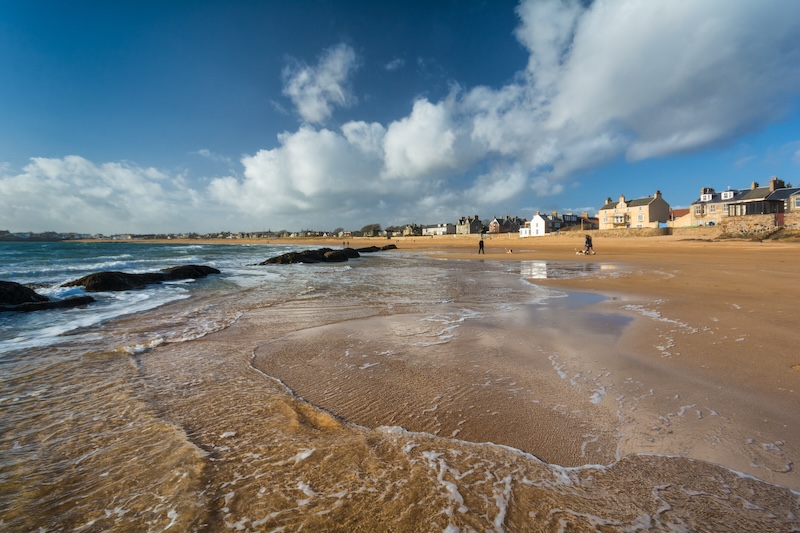
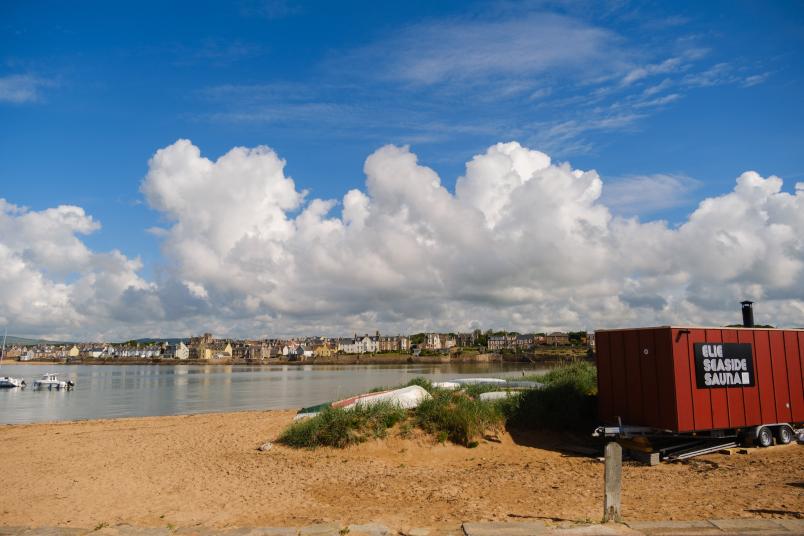
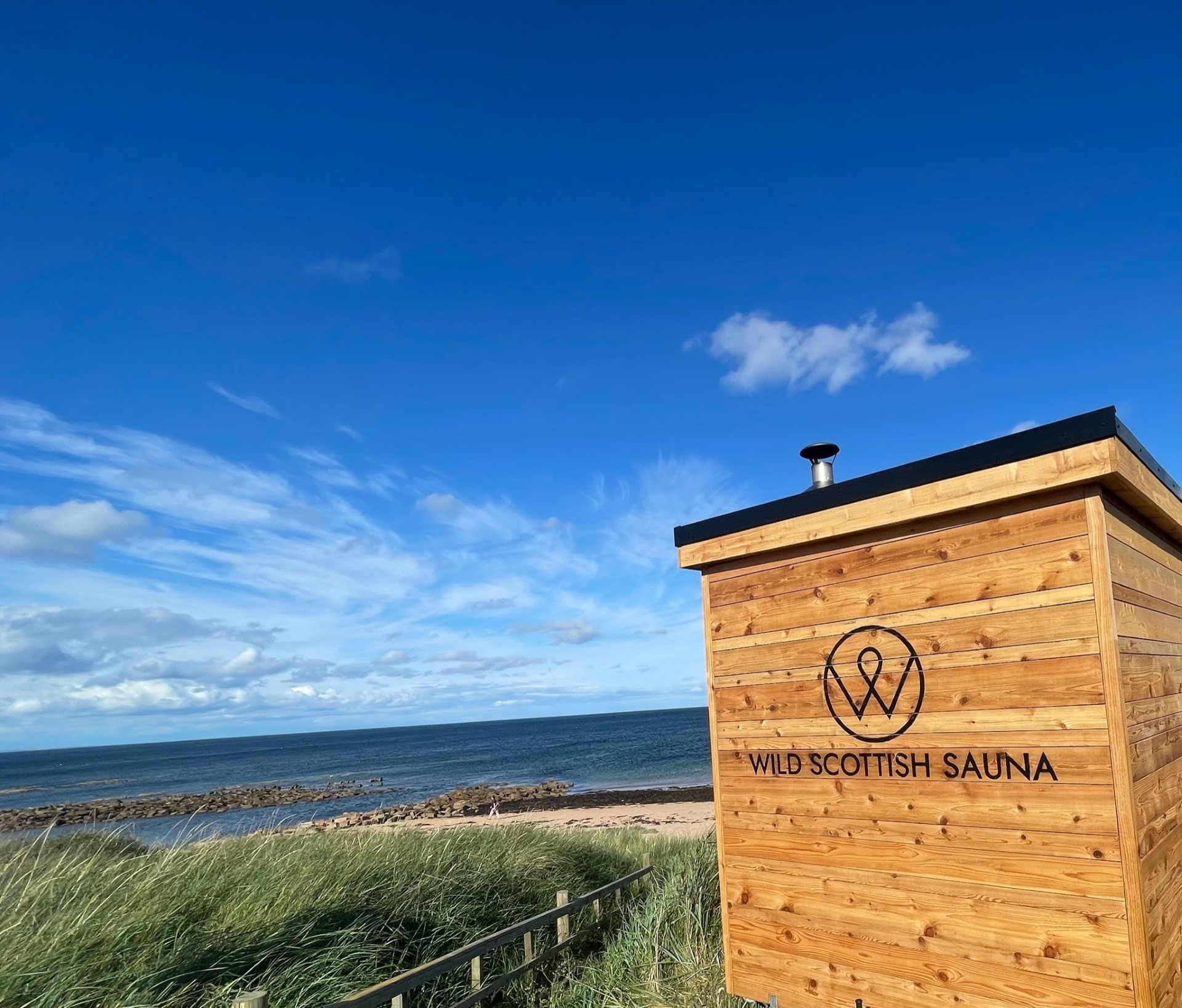
The benefits of outdoor saunas were inspired from the mobile sauna movement of Scotland’s Nordic neighbours to promote physical and mental freedom amid the natural environment. There are five outdoor saunas in Fife for those seeking solitude or a shared adventure to indulge in private or group sauna sessions. This trendy health kick comes in different forms from a converted horsebox to a shipping container and are available to hire for an hour and in between to brave wild swimming. Elie Seaside Sauna, for example, is perched on the dunes of Elie Harbour in East Neuk, angled towards the setting sun with a full-length, heat-tempered, glass side which overlooks the dunes over Woodhaven Bay, to Elie Beach and the cliffs. Other outdoor saunas include Cellardyke Seaside Sauna, St Andrews Seaside Sauna and Wild Scottish Saunas which have two locations, Kingsbarns Beach and Eden Springs.
Places along the coast have delightful names. There’s Pittenweem, a traditional East Neuk fishing port with an historic working harbour home to a fleet of fishing boats, Anstruther with its historic fishing museum, the black and white houses of West & East Wemyss and Dysart with a harbour that is often seen on TV. In between, the countryside is dotted with strawberry and raspberry fields, twitchers on the watch and Lundin Golf Club which was established in 1868 and where the course remains largely as it was years ago.
The village of Culross is considered to be Scotland’s most complete example of a burgh of the 17th and 18th centuries. It’s like stepping back in time as you stroll along old and steep cobbled roads which lead from the market cross to the hilltop abbey lined with white harled houses with red-tiled roofs. The oldest house dates back to 1526. The stand out building is the ochre-coloured palace which sits royally in the centre. The reconstructed period garden is filled with raised beds of medicinal herbs and utility plants, fruits and vegetables, interlaced with shell paths. Spread over different levels, it is possible to look out over the Forth to Blackness Castle. Both the palace and garden are under the National Trust for Scotland and provide an insight into life in Culross Palace during its day with original painted woodwork and lovingly restored 17th- and 18th-century interiors. Culross is acknowledged as one of the most picturesque villages in Scotland and as such is the backdrop to many film and television locations such as Outlander.
Places to explore in the area include Ravenscraig Castle, one of Scotland’s earliest artillery forts in Kirkcaldy set on a cliff top that drops into the Firth of Forth. Falkland Palace was the Stuart monarchs country residence for 200 years and a favourite place of Mary Queen of Scots. It is located in the heart of a conservation village, amidst gardens. Falkland Palace is also home to the oldest royal tennis court in Britain, built for King James V. Aberdour Castle is fondly described as a ‘splendid ruin’built in the 1100s and went on to serve generations of three noble families. Visit the Scottish Fisheries Museum, a charitable trust, to learn about the collection of historic buildings around the harbour and the fishing’s industrial revolution of the area. The Crail Museum provides an insight into the past life of this ancient Royal Burgh, its seafaring tradition, Crail Golfing Society (founded in 1786 and 7th oldest in the world) and airfield history from the First World War until its closure in 1960. Crail has been a prosperous and important trading and fishing port since the 12th century. And for a tipple, visit the Kingsbarns Distillery and Visitor Centre which sits in a charming 18th century farm setting and features an exhibition, whisky and gin distillery tours, tastings. Here you can learn how to make your own gin with a convenient bus stop at the end of the road.
Fife Coastal Path
Scotland’s longest continual coastal path extends 117 miles and provides an excellent active component for a holiday escape. Choose to walk, run, jog, or cycle from Kincardine Bridge on the Forth’s wide estuary, round the East Neuk of Fife to Newburgh on the banks of the River Tay. You may spot seals, dolphins, even otters and if you’re lucky, a puffin.
Dunfermline
Once the capital of Scotland for many years, (between the 11th and 14th century), Dunfermline was the royal seat of Scotland’s medieval kings and will certainly test your knowledge of Kings & Queens. Visit the impressive and award-winning Carnegie Library & Galleries which introduces the Royals themselves as well as a timeline exhibition to guide you to the present day. The Dunfermline Carnegie Library opened in 1883 and was the world’s first Carnegie Library funded by the Scottish-American businessman and philanthropist Andrew Carnegie, one of the great Scots of the 19th century. You can visit the Andrew Carnegie’s birthplace, a humble cottage where he spent his early years.
Carved into Dunfermline Abbey’s stone tower are the words, King Robert The Bruce around its top perimeter. He was a warrior and king who freed Scotland from English rule back in 1314. The dramatic 11th century abbey, situated at the side of Pittencrieff Park, is where many royals and famous Scottish people have historic links. Robert The Bruce is buried here, although his heart is buried in Melrose Abbey in the Scottish borders. You can see his tomb in the New Abbey Church.Other Kings and Queens believed to lie buried beneath the abbey church include Queen Margaret, King Malcolm III and David I. Nearby and all in pink is Abbot House, an ‘A’ graded-listed building with a walled garden also situated within the Dunfermline’s Heritage Quarter. Dunfermline was named a Royal Burgh in 1124 by King David of Scotland and in 2022 it was granted city status by Queen Elizabeth II. Today, with a population of almost 57,000 it is one of the fastest growing areas in Scotland.
The Forth Bridges
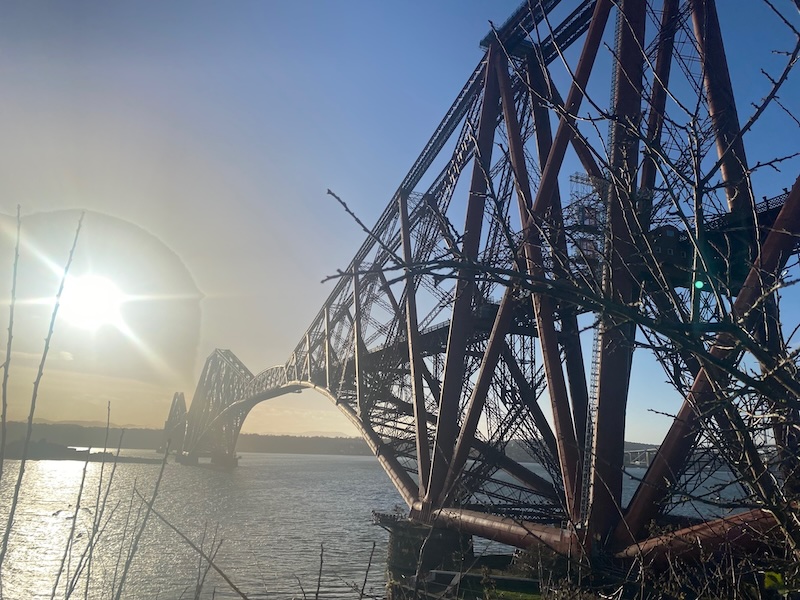
A spectacle in iron and architecture of the modern world. The Forth Bridges are one of Scotland’s most recognisable locations. This iconic and historic sight is a crisscross of linear design, towering side by side over the Firth of Forth structures glinting in the sunlight and represent the pinnacle of engineering across three centuries. These bridges connect Fife with Edinburgh across the River Forth.
The oldest of the bridges is The Forth Bridge, a designated UNESCO World Heritage Site. It is an excellent example of Victorian engineering which opened to rail transport in 1890 and today sees 200 trains daily through its steel cantilevers. The Forth Road Bridge is a suspension bridge which was opened in 1964 by Queen Elizabeth II, the first bridge of its kind in the UK, the longest outside the USA and the fourth longest in the world in its day. Today the Forth Road Bridge carries public transport and has two walkways open to walk or cycle across a short way to enjoy the views. There’s a viewing platform at the south end of this Bridge. The 21st Century Queensferry Crossing was also opened by Queen Elizabeth II in 2017. This 1.7-mile structure is the longest three-tower, cable-stayed bridge in the world and the largest to feature cables which cross mid-span.
Casting a spell
Torryburn Bay is a village which lies on the north shore of the Firth of Forth and is part of the coastal path but it was also renowned as the burial place of Torryburn’s witch and infamous victim, Lillias Adie who died in 1704. Her intertidal grave is the only known one in Scotland of an accused witch. Fife was the epi-centre of the most brutal witch hunts and persecution, which accelerated between mid-16th to early 17th centuries. RAWS, is a Scottish Charitable Incorporated Organisation campaigning to raise awareness of the ordinary women & men who were accused of witchcraft during this dark period of Scottish history.
Where to stay:
You couldn’t ask for a friendlier, cosier hotel than this. The considerate staff go the extra mile to make you feel welcome. The rooms have an inviting décor with heavy curtains, matching bed spreads and a large bright bathroom. The food is excellent in the oak panelled dining room serving both Scottish breakfast and dinner with a good variety of choice. There’s a bar and two lounges to relax and look out to the gardens. The hotel is over 200 years old and enjoys an elevated position overlooking the city of Dunfermline which is a convenient walk away and not too far to travel for the benefits of outdoor saunas.
The 12 Benefits of Outdoor Saunas:
Skincare: The heat causes perspiration which can improve skin tone and complexion, remove dead skin, and renew cells
Detoxification: Sweating releases toxins from the body
Muscle relaxation: The heat and atmosphere can help muscles relax and repair
Improved circulation: The heat can improve circulation and regulate blood pressure
Reduced fatigue: The heat can help reduce fatigue and increase energy levels
Improved breathing: The high temperature and dry air can open airways and reduce congestion
Reduced fluid retention: Sweating can help reduce fluid retention and assist with weight loss
Stress relief: Regular sauna bathing can help alleviate stress
Improved sleep quality: The natural light from stepping outside to use the sauna can help regulate your circadian rhythm and improve sleep quality
Reduced stroke risk: Improved cardio health can reduce the risk of stroke
Saunas can mimic the effects of moderate intensity exercise.
Extreme hot and cold temperatures can be dangerous, so you should check with a doctor if you have a heart condition or irregular blood pressure.
More information at https://www.welcometofife.com
Read here for more healthy places to visit and experience